Home / Journal / Indian Heritage & Craft
Indian Heritage & Craft
Zardozi Embroidery History
Discover the royal history, origin, and intricate craftsmanship of Zardozi embroidery. Learn how this ancient Mughal gold-thread art form survived generations to shape m…
Threaded in Gold: My Personal Reflection on the Royal Legacy of Zardozi Embroidery
Whenever I hold a genuine piece of hand-crafted couture, there is a distinct, almost mesmerizing weight to it that instantly grabs my attention. Long before fast fashion and high-speed automated looms changed how we dress, true luxury wasn’t about mass production—it was measured in hours of patient handwork and precious metals. For me, nothing captures that grandeur quite like Zardozi, an art form where gold becomes thread and fabric becomes a canvas built for royalty.
What the Name Means to Me
To really appreciate Zardozi, I always look back at where the word comes from. It blends two Persian terms:
Zar, which translates to gold.
Dozi, which means embroidery or work.
Literally meaning "embroidery in gold," Zardozi has never been just a simple decorative stitch in my eyes. It was created as a bold statement of authority, artistic brilliance, and pure luxury.
Tracing Its Journey: From Persia to the Mughal Courts
Although the roots of this technique stretch back thousands of years to ancient Persia, Zardozi truly found its soul and golden age in the Indian subcontinent around the 16th century.
Akbar’s Royal Legacy
During the reign of Emperor Akbar, Zardozi transformed from a regional craft into a grand imperial pride. Royal workshops (karkhanas) brought together master artisans from across Persia and India to collaborate.
In those days, craftsmen worked with pure silver wire that was melted, stretched thin, and wrapped in real gold leaf. They weren't just decorating clothes; they were transforming everything in sight:
Intricate royal robes, turbans, and ceremonial veils
Heavy velvet tapestries and wall hangings for palace halls
Regal scabbards for ceremonial swords
Elaborate drapery for royal elephants and horses
The Master Process: How I See Zardozi Come Alive
Unlike standard flat embroidery, what impresses me most about Zardozi is its rich, three-dimensional depth.
Setting the Frame (The Adda): Artisans stretch heavy fabric—usually rich velvet, raw silk, or satin—tightly across a large wooden frame called an adda.
Transferring the Vision: Detailed patterns inspired by nature (blooming flowers, paisleys, and arches) are drawn on tracing paper and transferred onto the fabric using fine powder.
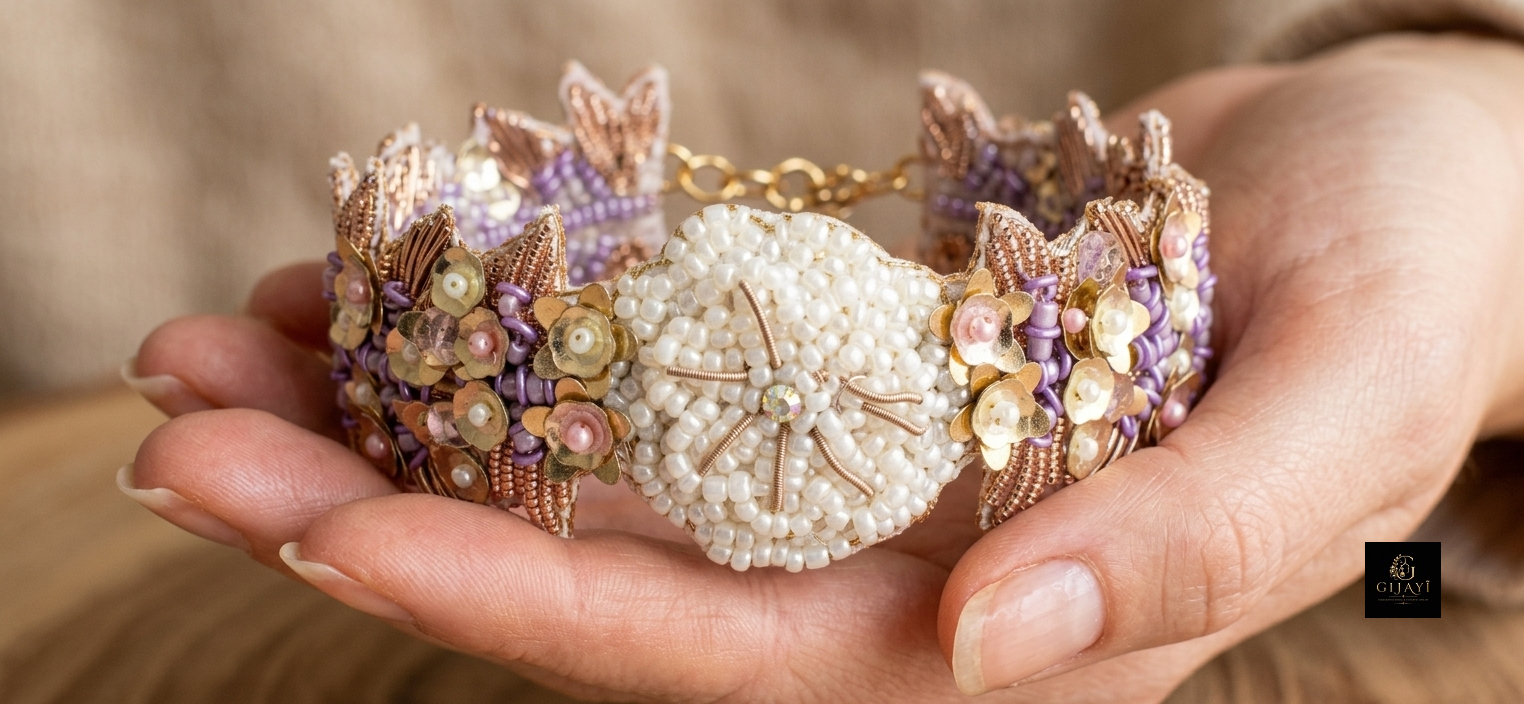
The Intricate Stitching: Working with an aari (a specialized hooked needle), artisans painstakingly attach metallic coils, sequins, pearls, and stones, building raised textures that shimmer from every angle.
Survival and Modern Rebirth
It breaks my heart to think about how close Zardozi came to fading away when imperial patronage declined during British rule. Real precious metals became far too costly, forcing many legendary families out of the trade.
Fortunately, the spirit of the craft couldn't be extinguished. Heritage cities like Lucknow (which now holds a Geographical Indication tag for its signature Zardozi), Delhi, Agra, Hyderabad, and Bhopal held onto these traditional secrets.
Today, copper wire electroplated with gold and silver allows us to enjoy this imperial aesthetic in a much more sustainable and accessible way.
How I See Zardozi Shaping Modern Fashion
To me, seeing Zardozi on current high-fashion runways is proof that true heritage never goes out of style. India's top designers continue to take this centuries-old art and weave it into contemporary designs:
Wedding Elegance: Heavy bridal lehengas and royal sherwanis enriched with Zardozi remain the centerpiece of South Asian celebrations.
Contemporary Chic: Beyond traditional attire, I love seeing this technique show up on tailored jackets, designer clutches, footwear, and luxury home accents.
Final Thoughts
In a fast-paced world dominated by automated factories, Zardozi stands out to me as a timeless testament to human skill, patience, and passion. Wearing or owning a piece of real Zardozi isn't just about fashion—it’s about wearing a piece of living history.
Related Jewellery


You May Also Like
5 min read
The beginning of Zardozi Embroidery
Discover the centuries-old story of Zardozi—a golden art shaped by royal traditions, skilled artisans and countless delicate stitches.
4 min read
The Art of Intricate Detail: My Personal Guide to Wearable Heritage Jewellery
Discover how to choose, style, and care for intricately detailed handcrafted statement jewellery—from embroidered chokers to delicate pearl droplets.